Designs for Health
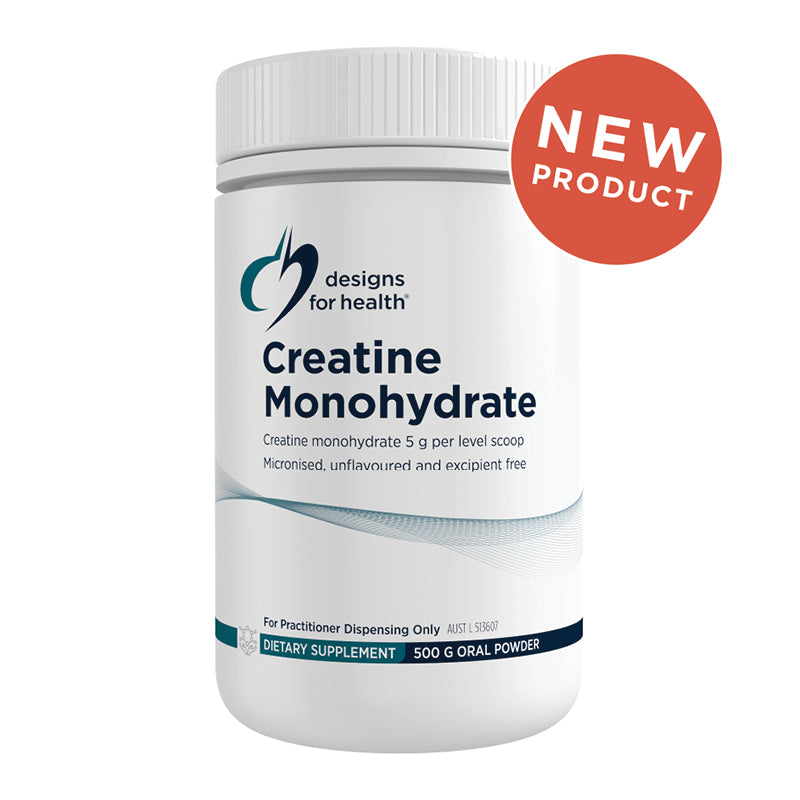
Creatine Monohydrate
Creatine Monohydrate
–––
已含税费。
Please log in or create an account to see prices and purchase this item.
Nutritional Biochemistry
Creatine (N-aminoiminomethyl-N-methylglycine) is a naturally occurring nitrogen-containing compound synthesised endogenously from the amino acids glycine, arginine and methionine. The first step of biosynthesis occurs in the kidneys, where arginine and glycine are converted to guanidinoacetate via L-arginine:glycine amidinotransferase.
The second step occurs in the liver, where guanidinoacetate is methylated by guanidinoacetate methyltransferase, using S-adenosyl methionine (SAM) as a methyl donor. Once synthesised, creatine is released into circulation and transported to tissues, primarily skeletal muscle (~95 %), with smaller amounts in the brain and kidneys.
Creatine is synthesised at a rate of approximately 1–2 g per day. It is then distributed via the circulation to tissues, predominantly skeletal muscle, where it exists in dynamic equilibrium with phosphocreatine.
Within muscle, creatine is found in both its free and phosphorylated forms, such as phosphocreatine (PCr). Approximately half of total intramuscular creatine exists as phosphocreatine, which serves as a readily available high-energy phosphate reservoir.
Such factors influence the complex endogenous pharmacokinetics of vitamin C, with absorption, transport, metabolism and elimination regulated by intestinal absorption, tissue concentrations and renal reabsorption. Depending on the presence of risk factors associated with inadequate endogenous vitamin C concentrations, following oral intake, plasma levels increase until reaching repletion/saturation levels (60-80 μmol/L).
Endogenous synthesis provides around half of the daily creatine requirement,2 with the remainder obtained from dietary sources, primarily red meat and fish, or supplementation. Approximately 1–2 % of intramuscular creatine is degraded to creatinine each day and excreted via the urine. The rate of degradation is higher in individuals with greater muscle mass or higher levels of physical activity. Baseline creatine levels may be lower in vegetarians and older adults due to reduced intake or altered metabolism, making supplementation an effective strategy to help maintain creatine levels and support physiological functions
Mechanism of Action
Creatine and phosphocreatine are key components of the creatine kinase–PCr system, which rapidly regenerates adenosine triphosphate (ATP) during periods of increased energy demand. PCr donates a phosphate group to ADP to resynthesise ATP — the primary energy currency of the cell. This reaction, catalysed by creatine kinase (CK), provides an immediate energy buffer that supports muscular contraction and neural activity
Because PCr has a higher phosphate transfer potential than ATP, it allows rapid ATP resynthesis during periods of increased energy demand, such as resistance training or cognitive effort, delaying glycogen utilisation and sustaining cellular energy output.
Cellular uptake of creatine occurs via Creat-T transporters, which move creatine against a concentration gradient in a sodium- and chloride-dependent manner, ensuring efficient delivery to tissues with high energy demand such as skeletal muscle and neural tissue. Creatine then functions as both an energy buffer and energy shuttle, moving high-energy phosphate bonds between mitochondria and the cytosol to maintain energy supply at sites of high metabolic demand. Over time, creatine and PCr spontaneously cyclise to form creatinine, which is excreted via the kidneys.
By supporting ATP availability, creatine supplementation can maintain and support energy production, which underpins its benefits in muscle performance, stamina, cognitive function and memory.
Clinical Use
Creatine supplementation is widely used in sports and exercise settings, where it remains one of the most popular and well-researched nutritional supplements globally. Its clinical application is supported by a strong evidence base demonstrating benefits in enhancing muscle performance and supporting lean body mass during resistance training, maintaining energy production, and supporting cognitive function. These effects are observed across a broad range of populations, including females, aging individuals, and vegetarians. While its role in sports performance is well established, creatine has increasingly recognised for its relevance in broader areas of human health.
Creatine Supplementation Strategies: Loading vs Maintenance
Early research demonstrated that a loading phase of creatine can rapidly increase intramuscular creatine stores. This typically involves supplementing with 20-25 g/day for 5-7 days, divided into smaller doses (e.g., 4-5 × 5 g daily), followed by a maintenance phase of 3-5 g/day. This approach can lead to faster saturation of muscle creatine levels. Once muscles have become saturated, it typically takes around four weeks to return to baseline levels after discontinuation However, loading is not always required to achieve saturation. A common misconception is that creatine must be “loaded” to increase intramuscular stores and achieve performance benefits. However, daily supplementation with 3-5 g/day over approximately four weeks results in similar increases in intramuscular creatine content compared to a loading protocol, albeit over a longer time frame.3,5 In practice, creatine is sometimes taken with simple carbohydrates, such as glucose or fruit juice, to enhance muscle creatine accumulation
The choice of strategy depends on individual goals and clinical context:
- A loading phase may be preferred where rapid saturation is desired.
- A maintenance-only strategy may suit individuals supplementing long term or wishing to minimise side effects sometimes observed during loading.
In summary, accumulating evidence indicates that creatine loading is not a one-size-fits-all strategy, and should be tailored to individual goals and clinical context.
Directions to use:
Non-loading dose: Mix 1 level scoop (5 g) in 200 mL of water and consume immediately. Take once or twice daily, or as directed by your health professional.
Loading dose (if required): Mix 4 level scoops (20 g) in 200 mL of water, in divided doses, for 5–7 days. Continue with 1 level scoop (5 g) daily, or as directed by your health professional.
Allergen Information:
- No added: gluten, dairy, lactose, nuts, corn, or soy
- Vegan Friendly
Prescribing Information:
- Creatine monohydrate is generally well-tolerated at standard supplemental intakes.
- Maintain adequate hydration during use, particularly during higher dose loading phases
- Caution is advised in individuals with pre-existing renal impairment or those using nephrotoxic medications. Gastrointestinal discomfort may occur at higher intakes, especially during loading.
- No significant medicine interactions have been reported at typical supplemental doses.
- Suitable for vegetarians and vegans.